
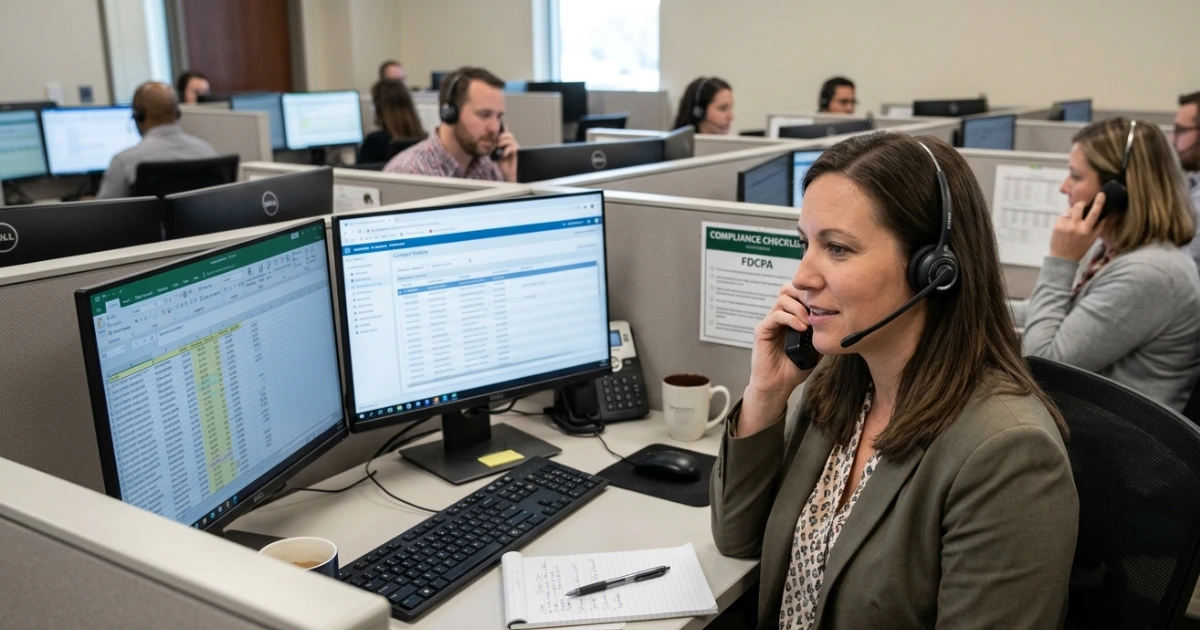
I’ll be honest with you. When people talk about careers in finance, they usually bring up investment bankers, financial advisors, or stock traders. But there’s one role that quietly keeps the entire private lending system running. And that’s the private loan assortment officer.
Here’s the thing. Without this role, private lenders would hemorrhage money faster than they could distribute it. Delinquent accounts would pile up. Recovery rates would tank. And borrowers would have no one structured enough to actually help them work through their obligations responsibly.
So I want to walk you through everything I know about this career path. What the role actually involves. What skills you need. How much you can realistically earn in 2026. And why this position is more financially impactful than most people give it credit for.
Let me start from the very beginning.
What Is a Private Loan Assortment Officer?
A private loan assortment officer is a finance professional who manages, organizes, and recovers delinquent or overdue loan accounts within a private lending environment. The word “assortment” here doesn’t mean a mix of candies. Actually, let me rephrase that. It refers to the categorization, prioritization, and strategic sorting of loan accounts based on risk levels, delinquency stages, and recovery potential.
Think of it like this. It’s like being an air traffic controller for debt. You’re not flying the planes yourself. But you’re organizing which ones land first, which ones need rerouting, and which ones are in emergency territory.
The private loan assortment officer specifically works outside the traditional bank framework. They operate in private lending institutions, credit companies, fintech lenders, peer-to-peer lending platforms, and non-bank financial institutions (NBFIs). This is a critical distinction. Public banks have their own regulated collection systems. Private lenders often rely more heavily on dedicated assortment professionals.
Private Loan Assortment vs. Traditional Loan Collection: What’s the Difference?
This is a question I get a lot, and it’s fair enough to ask because the two roles do overlap. But they’re not the same thing.
| Factor | Private Loan Assortment Officer | Traditional Loan Collection Officer |
|---|---|---|
| Work Environment | Private lenders, NBFIs, fintechs | Banks, credit unions |
| Regulatory Framework | State laws, FDCPA if third-party | Full federal banking regulations |
| Borrower Type | Individual consumers, SMEs | Broad consumer and commercial base |
| Recovery Approach | Flexible, negotiation-heavy | Standardized procedures |
| Salary Range (2026) | $48,000 to $95,000 per year | $42,000 to $85,000 per year |
| Technology Used | CRM software, LMS platforms | Core banking systems |
So the private loan officer generally has more flexibility in how they negotiate. But they also carry more personal accountability because private lending institutions often have thinner compliance teams.
Core Responsibilities of a Private Loan Assortment Officer
Let me break down what this role actually looks like day to day. Because when you look at a job posting, the language is always sanitized. Here’s what really happens.
1. Loan Portfolio Segmentation
You spend a good chunk of time sorting loan accounts by delinquency bucket. Early-stage accounts (less than 30 days overdue) get handled differently from accounts that are 90 or 120 days past due. This segmentation is the foundation of every recovery strategy you’ll build.
2. Borrower Communication and Outreach
You contact delinquent borrowers by phone, email, SMS, and sometimes in person. The goal isn’t to harass. It’s to open a dialogue. You need to understand why they’ve missed payments and figure out whether this is a temporary cash flow problem or a deeper financial issue.
3. Repayment Plan Structuring
This is honestly where the real skill shows up. You negotiate customized repayment arrangements that work for both the lender and the borrower. That might mean extending loan terms, temporarily reducing payment amounts, or setting up a structured settlement plan.
4. Legal Referral Coordination
When accounts don’t respond to standard outreach, the private loan assortment officer escalates to legal teams. They don’t make the legal call themselves. But they prepare the documentation, flag the account accurately, and coordinate with external counsel.
5. Documentation and Record Management
Everything gets documented. Every call. Every agreement. Every payment received. This is non-negotiable both for legal protection and for audit trails.
6. Compliance Monitoring
Because the role involves contacting borrowers about debt, you need to stay current with the Fair Debt Collection Practices Act (FDCPA), the Consumer Financial Protection Bureau (CFPB) guidelines, and any applicable state-level regulations. In 2026, state attorneys general have stepped up enforcement significantly as the CFPB pulled back some of its supervisory activity. That makes local compliance knowledge more valuable than ever.
Why Private Loan Collection Is More Complicated Than It Looks
Can a private loan assortment officer just call a borrower and demand money? No. And that’s one of the most misunderstood aspects of this career.
The FDCPA sets federal standards for how debt collectors can communicate with consumers. The rules cover everything from what time of day you can call, to what language you can use, to what information you must provide. Violations carry civil liability and CFPB enforcement risk.
But here’s where it gets nuanced for private loan officers specifically. The FDCPA technically applies to third-party debt collectors, not original creditors collecting their own debts. So if a private lender is collecting on their own loan using their own name, some FDCPA provisions may not directly apply. But several states have their own debt collection laws that extend similar protections to borrowers. California’s Rosenthal Act, for example, extends FDCPA-like rules even to original creditors.
The practical takeaway? You still need to know the rules cold. Whether or not the federal law technically applies to your specific situation, consumer-friendly communication practices protect you legally and professionally.
Skills That Actually Matter in This Role
I’ve seen a lot of job descriptions for loan assortment roles that list vague things like “strong communication skills” and “detail-oriented.” Sure. But let me tell you what skills genuinely separate average performers from excellent ones.
Negotiation Ability
This is the top skill. You’re negotiating repayment arrangements multiple times a day. You need to know when to push and when to give. An experienced private loan assortment officer knows that a partial recovery today is almost always better than zero recovery through prolonged legal action.
Financial Analysis
You need to assess a borrower’s financial situation quickly. Look at their income, expenses, other debts, and payment history. You can’t structure a realistic repayment plan without this analysis.
Regulatory Knowledge
As I mentioned, FDCPA, CFPB, FCRA, and state-level laws are all in play. The Fair Credit Reporting Act (FCRA) matters too because it governs how collection activity gets reported to credit bureaus.
CRM and LMS Software Proficiency
In 2026, private lenders use sophisticated Loan Management Systems (LMS) and Customer Relationship Management (CRM) tools. You need to be comfortable navigating these platforms, logging activity, setting follow-up reminders, and pulling account reports.
Emotional Intelligence
Look, borrowers in default aren’t usually there because they’re careless. Most of the time they’re dealing with job losses, medical emergencies, or business failures. You need to approach these conversations with empathy without losing your professional objectivity.
Written Communication
Demand letters, repayment agreements, and escalation memos all need to be clear, professional, and legally sound. Poor written communication creates liability.
Certifications That Strengthen Your Career as a Private Loan Officer
Is certification required to work as a private loan assortment officer? Generally, no. But it absolutely helps. Here are the credentials worth considering.
Mortgage Loan Originator (MLO) License
If you work on mortgage-adjacent private lending, the MLO license requires at least 20 hours of coursework, a licensing exam, and background and credit checks. It’s renewed annually. Not every assortment role needs this. But if you’re dealing with private mortgage loans, it’s often required.
Certified Management Accountant (CMA)
The CMA, offered by the Association of Accountants, covers financial management at a deep level. It’s the certification that can push you from a standard loan officer role into branch management or portfolio leadership positions.
Residential Certified Loan Officer (CLO)
This credential specifically validates competency in residential loan handling, which maps well to private lending environments focused on consumer real estate debt.
American Bankers Association (ABA) Certifications
The ABA offers several finance-specific programs that build credibility with private lenders, particularly in credit analysis and compliance.
How Much Does a Private Loan Assortment Officer Earn in 2026?
Let’s talk money, because that’s ultimately what you’re here to understand.
According to salary data compiled from Glassdoor, PayScale, and ZipRecruiter as of early 2026, here’s a realistic picture.
Entry-Level (0 to 2 years experience): $42,000 to $55,000 annually
Mid-Level (3 to 6 years experience): $55,000 to $80,000 annually
Senior or Specialist Level (7+ years): $80,000 to $120,000 annually
Top Performers with Commission: $120,000 to $198,000+ annually
The highest earners in this field are typically those working on high-balance private commercial loan portfolios in financial centers like Texas, New York, and California. Glassdoor data from May 2026 shows Texas-based loan officers averaging around $160,000 annually, with top earners in the $278,000 range.
The thing is, private loan assortment roles often include commission structures tied to recovery rates. If you’re good at this job and you work for a private lender with a substantial delinquent portfolio, your income can scale significantly beyond the base salary.
The Day-to-Day Reality: A Practical Look at Three Scenarios
I want to give you real-world scenarios so this doesn’t stay abstract.
Scenario 1: Early-Stage Delinquency (30 Days Overdue)
A private consumer borrower misses their first payment on a $25,000 personal loan. You make contact within the first week. The borrower explains they had an unexpected medical bill. You review their payment history (which is clean), verify their current income, and offer a one-time 14-day extension. You document the conversation, log it in the LMS, and set a calendar reminder. The account self-cures. Recovery: 100%.
Scenario 2: Mid-Stage Delinquency (60 to 90 Days Overdue)
A small business borrower has missed three payments on a $75,000 private business loan. Multiple outreach attempts have been made. You finally reach the borrower’s financial officer. The business had a revenue disruption. You negotiate a reduced payment plan for three months, then a step-up to full payments. You formalize this in a written modification agreement. The account recovers partially but avoids charge-off status.
Scenario 3: Late-Stage Delinquency (120 Days or More)
A borrower has stopped responding entirely. Balance outstanding is $42,000. You’ve completed the full outreach cycle. You prepare a comprehensive account summary, document all communication attempts, flag the account for legal referral, and coordinate the handoff to external counsel. Your role at this stage shifts from negotiation to documentation and legal support.
These three scenarios represent the basic arc of private loan assortment work. And most of your days will involve some version of all three running simultaneously.
How Google’s Policies and Financial Website Compliance Affect This Industry
Now here’s something that most loan professionals and financial content publishers don’t connect properly. If you run or contribute to a financial website covering topics like private loan assortment, private lending, or debt recovery, Google’s quality and spam policies directly affect how your content performs.
Google applies manual actions when human reviewers identify spam policy violations on a website. These manual actions can lower rankings or remove pages from search results entirely. For finance websites, this is especially serious.
Common Manual Actions That Affect Finance Sites:
Spam content, thin affiliate pages, scraped content, cloaking, hidden text, keyword stuffing, unnatural links, sneaky redirects, and user-generated spam are all listed by Google as violation categories that trigger manual penalties.
So what counts as thin content in a financial context? Copied content rephrased from other lenders’ sites, low-quality affiliate pages pushing loan products without real analysis, doorway pages optimized only for rankings with no actual reader value, and low-quality guest posts that add nothing substantive.
How to Fix a Manual Action on a Finance Site:
Step one is reviewing the issue details in Google Search Console. Step two is identifying all affected pages. Step three is fixing every violation across the entire site, not just the pages flagged. Step four is ensuring all pages are crawlable and accessible to Google. Step five is submitting a reconsideration request.
A strong reconsideration request clearly explains what went wrong, describes every fix that was made, and provides specific examples of the improvements. Reviews can take anywhere from days to weeks.
The distinction between a Manual Actions report (spam and ranking violations) and a Security Issues report (hacking, malware, phishing) matters here too. They appear separately in Search Console and require different remediation paths.
For publishers running AdSense on finance-focused sites, the stakes are even higher. Google-served ads can’t appear on pages that violate spam policies. If your site gets flagged for thin affiliate content or scraped private loan information, you risk both ranking loss and ad-serving restrictions at the same time.
Privacy and Compliance Obligations for Private Loan Professionals
If you work in private loan assortment, you’re handling sensitive personal and financial data constantly. This creates compliance obligations that go beyond just knowing the FDCPA.
Data Privacy Requirements:
You can’t share personally identifiable information with unauthorized parties. Every communication system you use, whether CRM, email, or phone, needs to be secured and access-controlled. When working with any digital platforms, your organization needs a clear privacy policy explaining how borrower data is collected, stored, and used.
GDPR and International Compliance:
If your private lender serves borrowers in the European Union, GDPR compliance is mandatory. That means obtaining explicit consent for data processing, honoring right-to-erasure requests, and documenting your data handling procedures thoroughly.
COPPA:
If your lending platform has any components accessible to minors under 13, COPPA regulations in the US apply.
Cookie and Consent Management:
Any website or digital portal through which borrowers interact with your lending company needs proper cookie disclosure and consent management, especially for personalized communications and location tracking.
Career Growth Path for a Private Loan Assortment Officer
Where does this career actually go? This is something a lot of people don’t think through when they’re starting out.
The typical career trajectory looks like this:
Starting out, you’re handling individual accounts, building your negotiation skills, and learning the LMS systems inside and out. At around the three to five year mark, you can move into a senior or specialist role where you manage a team of junior collectors or own a high-balance portfolio segment. From there, the paths diverge.
Some professionals move into credit risk analysis, leveraging their deep knowledge of default patterns and borrower behavior. Others move into loan origination, where understanding what makes loans go bad actually makes you better at underwriting decisions. A smaller group moves into compliance and regulatory roles, particularly valuable in 2026 as state-level enforcement has intensified.
And some experienced private loan assortment officers eventually move into consultancy, advising private lenders on portfolio health, recovery strategy, and compliance frameworks. That’s where the real earning ceiling opens up.
Technology Shaping Private Loan Assortment in 2026
The tools available in this field have changed significantly over the past few years. And honestly, if you’re not comfortable with financial technology, this career path will be harder than it needs to be.
Loan Management Systems (LMS): Platforms like LoanPro and similar tools automate much of the workflow around account tracking, payment processing, and compliance documentation. In 2026, agentic AI capabilities are being layered into these platforms, automating routine outreach and flagging high-risk accounts before they hit 30 days overdue.
CRM Systems: Salesforce Financial Services Cloud and specialized alternatives help assortment teams manage borrower communication histories, set follow-up workflows, and monitor team performance.
Digital Communication Channels: The CFPB’s Regulation F, which governs electronic communication in debt collection, has made email and text-based outreach increasingly viable and regulated. Knowing how to use these channels compliantly is now a core competency.
Skip Tracing Tools: When borrowers become unreachable, private loan assortment officers often use skip tracing software to locate updated contact information. This must be done within legal boundaries.
Red Flags to Watch for in Private Lending Environments
Because this is a section I wish someone had shared with me earlier. Not every private lending shop operates ethically. And the private loan assortment officer role puts you on the front line of whatever culture exists at your employer.
Watch out for these patterns:
A lender that pressures you to use deceptive language with borrowers. A shop that asks you to misrepresent the legal status of a debt. An employer who discourages you from following FDCPA rules on the grounds that “this is private lending, the rules don’t apply.” A collection environment where harassment tactics are normalized.
These are not just ethical red flags. They’re legal landmines that can attach personal liability to you as an individual, not just to your employer.
Frequently Asked Questions
What is a private loan assortment officer?
A private loan assortment officer is a finance professional who manages, categorizes, and recovers delinquent loan accounts within a private lending institution. They negotiate repayment plans, communicate with borrowers, and coordinate legal referrals for unresolved accounts.
Is a private loan assortment officer the same as a debt collector?
They overlap significantly, but a private loan assortment officer typically works directly for the originating lender rather than as a third-party collector. This distinction has compliance and regulatory implications under the FDCPA.
What qualifications do I need to become a private loan assortment officer?
Most entry-level positions require a bachelor’s degree in finance, business, or a related field, though some lenders hire candidates with strong relevant experience. Certifications like the MLO license or CMA credential improve career prospects. Regulatory knowledge of FDCPA, CFPB guidelines, and state laws is essential.
How much does a private loan assortment officer earn in 2026?
Entry-level roles start around $42,000 to $55,000 annually. Mid-level professionals earn $55,000 to $80,000. Senior roles and top performers with commission can earn $80,000 to $198,000 or more depending on location and portfolio size.
What is the difference between a loan assortment officer and a loan collection officer?
The term “assortment” specifically relates to the categorization and strategic prioritization of loan accounts across multiple risk segments. A collection officer typically focuses on direct borrower outreach and payment recovery. In practice, many private loan assortment officers perform both functions.
What software do private loan assortment officers use?
They commonly work with Loan Management Systems (LMS), Customer Relationship Management (CRM) platforms, digital communication tools, and skip tracing software. Specific platforms vary by employer.
What regulations govern private loan assortment work?
The primary federal frameworks are the FDCPA, CFPB regulations, FCRA, and TCPA (for phone and digital communications). State laws vary significantly and in 2026 have become more active enforcement tools as state attorneys general have stepped up consumer protection efforts.
Can I become a private loan assortment officer without a finance degree?
Yes, though it’s more competitive. Demonstrated experience in customer service, financial services, or credit management, combined with relevant certifications, can substitute for a traditional finance degree at many private lenders.